Dec 2022 – Feb 2023
CSLast edited
End-to-End Client Acquisition System
This project engineered the core operations infrastructure for BlinkWeb, a CRM and client-acquisition engine that integrated the Norwegian Brønnøysund Register and three phone registries (1881, 180, Gule Sider) via REST APIs to automate data enrichment and contact verification.
Geospatial lead-matching algorithms reduced false positives in candidate identification, and automated outreach plus real-time contract generation eliminated manual handoffs end-to-end.
The system saved approximately 450 hours per year and reduced third-party API costs by roughly $10,000, serving as core infrastructure behind BlinkWeb's operations in 2024.
Affiliation
BlinkWeb
Keywords
- CRM
- Data Enrichment
- Data Validation
- Python
- REST APIs
- MySQL
- Web Scraping
From a web studio to a scraping problem
I finished upper secondary school in June 2022 and wanted a part-time job to run alongside university. The one thing I had always been good at was web design, so I registered my own company, BlinkWeb, and started building websites for small Norwegian businesses.

Building the sites was never the hard part. Finding people to build them for was.
The time sink
Every new client started with a cold call, and every call started with hours of manual work. Each morning I pulled the companies that had just registered in Brønnøysundsregisteret, then hunted for a phone number for each one across 1881, Gule Sider, and 180, because the registry’s API never hands out phone numbers. Then I stripped out everyone who had opted out of marketing calls, since calling a reserved number is illegal under the Norwegian Marketing Control Act. Only what survived became a call list.
That was hours gone before the first dial, every day. So I built a pipeline that does the whole thing while I sleep.
How it works
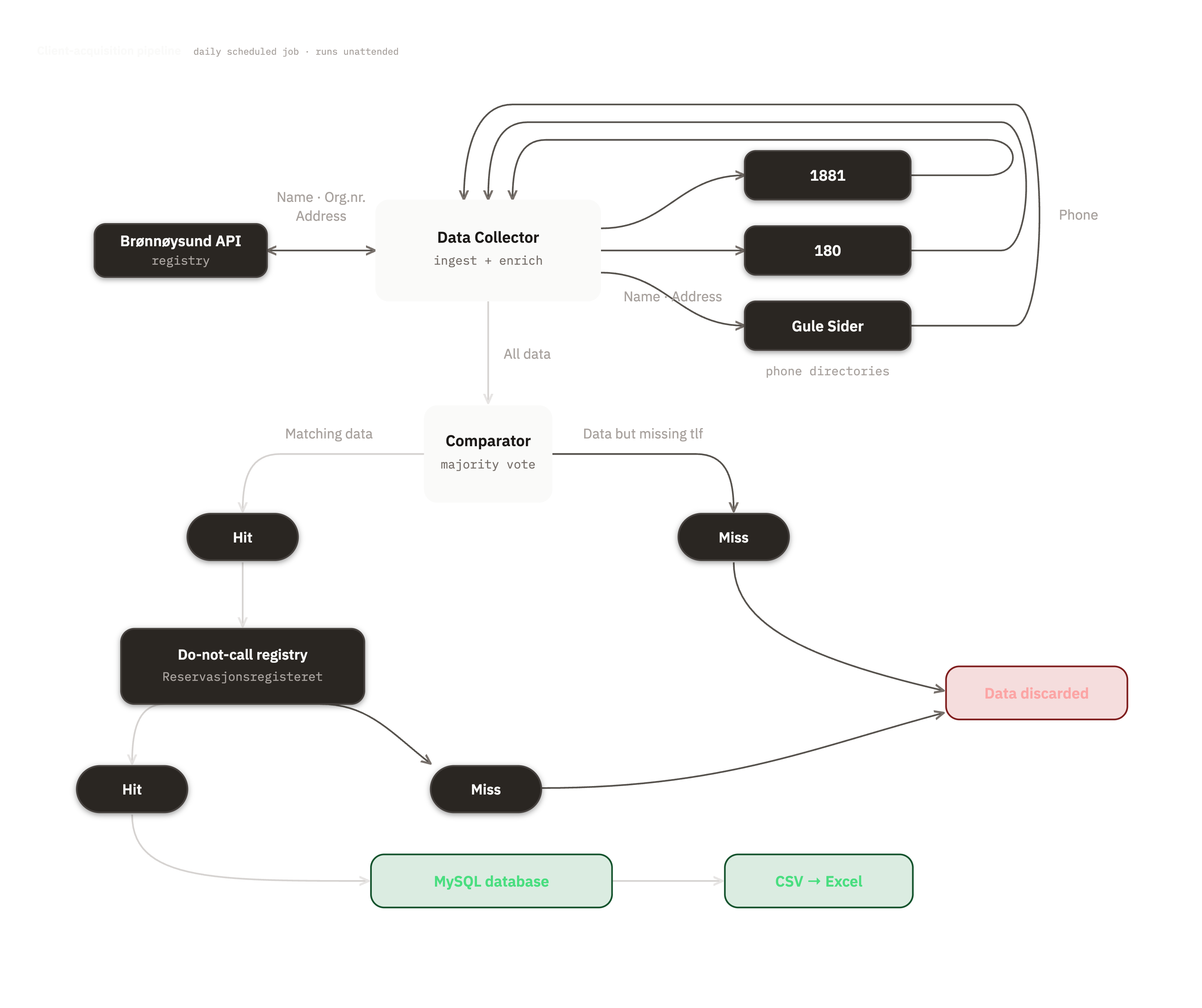
Pulling in the day’s companies. The collector asks the open registry API for every unit registered in the last 24 hours, filtered to the industries I sell to. That gives name, organisation number, and address, but never a phone number. That single gap is what the rest of the pipeline exists to close.
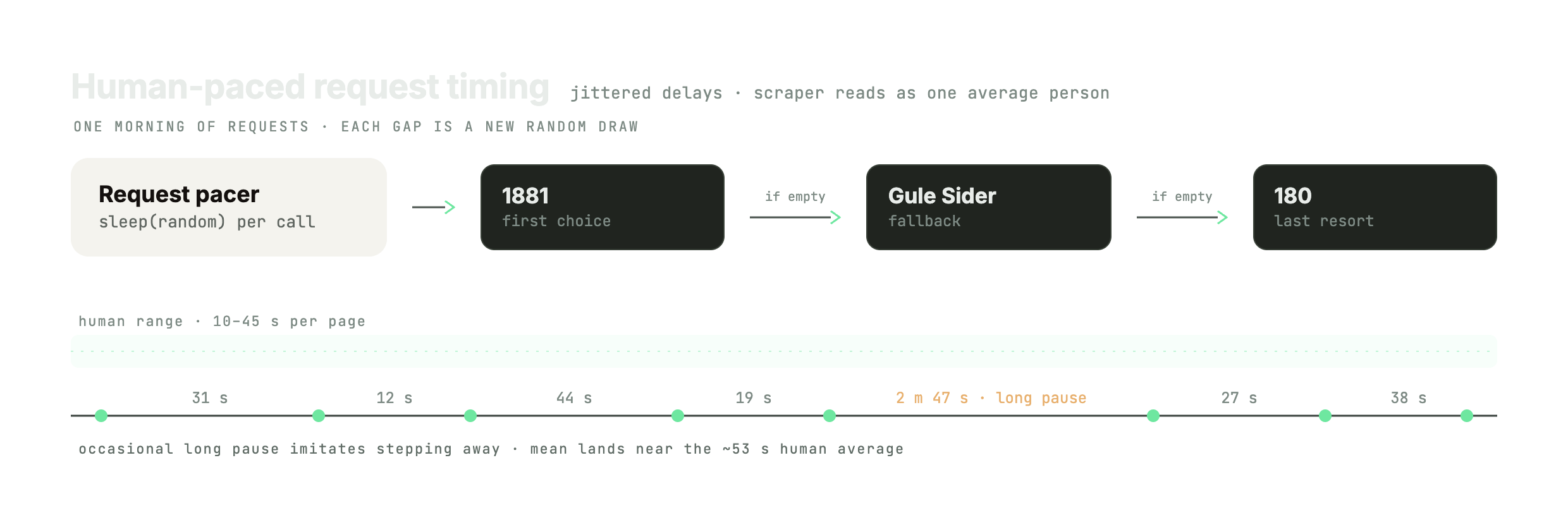
Finding a number, at a human pace. The collector works the public directories in a fixed order, 1881 first, Gule Sider as fallback, 180 as last resort, moving on only when the previous one comes up empty. Every request is spaced by a random, human-sized delay with the occasional long pause, so the scraper reads like one person browsing rather than a bot hammering the site.
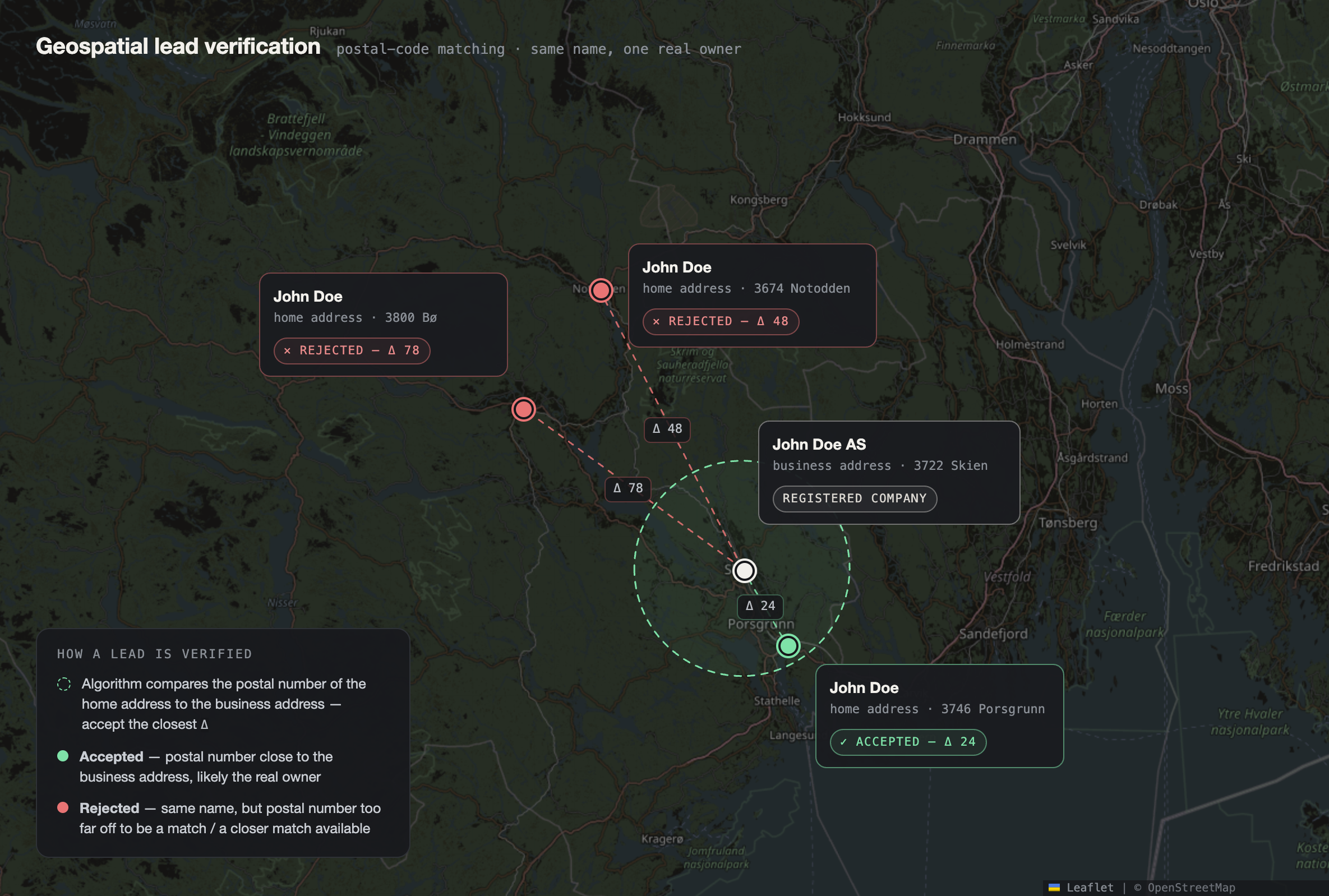
Making sure it’s the right number. Norwegian names are not unique, so a naive lookup happily hands you the number of a different “John Doe”. The system verifies each candidate geographically: it compares the postal code of the person’s home address against the registered business address and keeps the closest match. Same name on the other side of the country is rejected; same name a few kilometres away is almost certainly the owner.
Resolving, filtering, and storing. When several directories return a number, a comparator settles it by majority vote; if none does, the company is dropped. Every surviving number is checked in bulk against the do-not-call registry, and anyone who has opted out is removed here, at the pipeline boundary, so a reserved number can never leak into a call list downstream. What is left goes into a MySQL database keyed on the organisation number, which makes reruns idempotent and deduplicates leads across days.
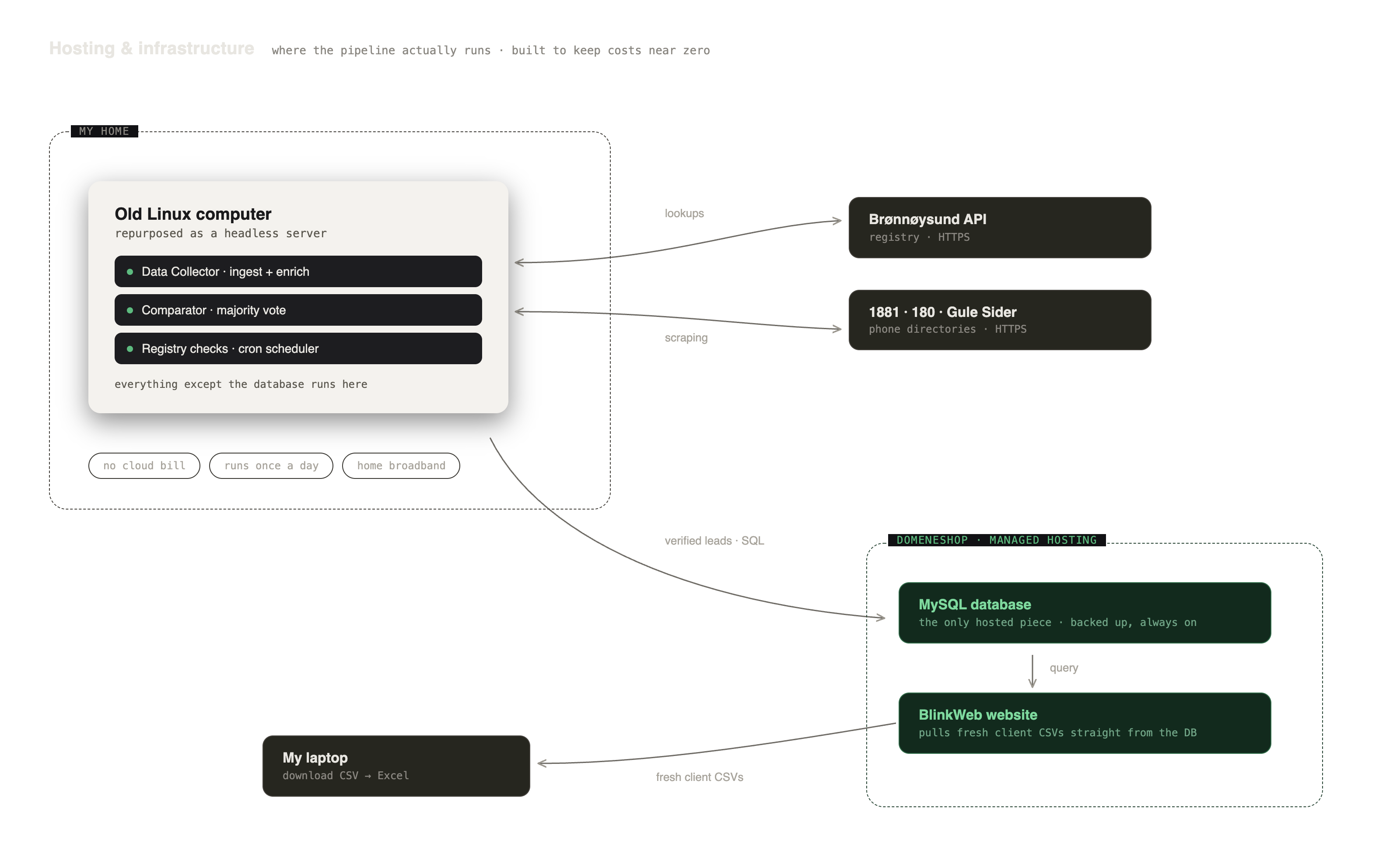
Where it runs. The collector, the comparator, and the daily scheduler all run on an old Linux computer repurposed into a headless server at home. The only hosted piece is the database, so the leads are backed up and always available. My BlinkWeb site pulls fresh call lists straight from it.
Results
A multi-hour manual routine became a scheduled job that leaves a deduplicated, legally compliant call list waiting every morning.
- ~450 hours per year reclaimed from manual list-building.
- ~$10,000 per year saved against the two realistic alternatives: paying someone part-time, or paying for the commercial 1881 API at the volume the business needed.
What I took away
What started as a way to avoid a boring morning chore was the thing that made running a company and studying full-time at the same time possible.